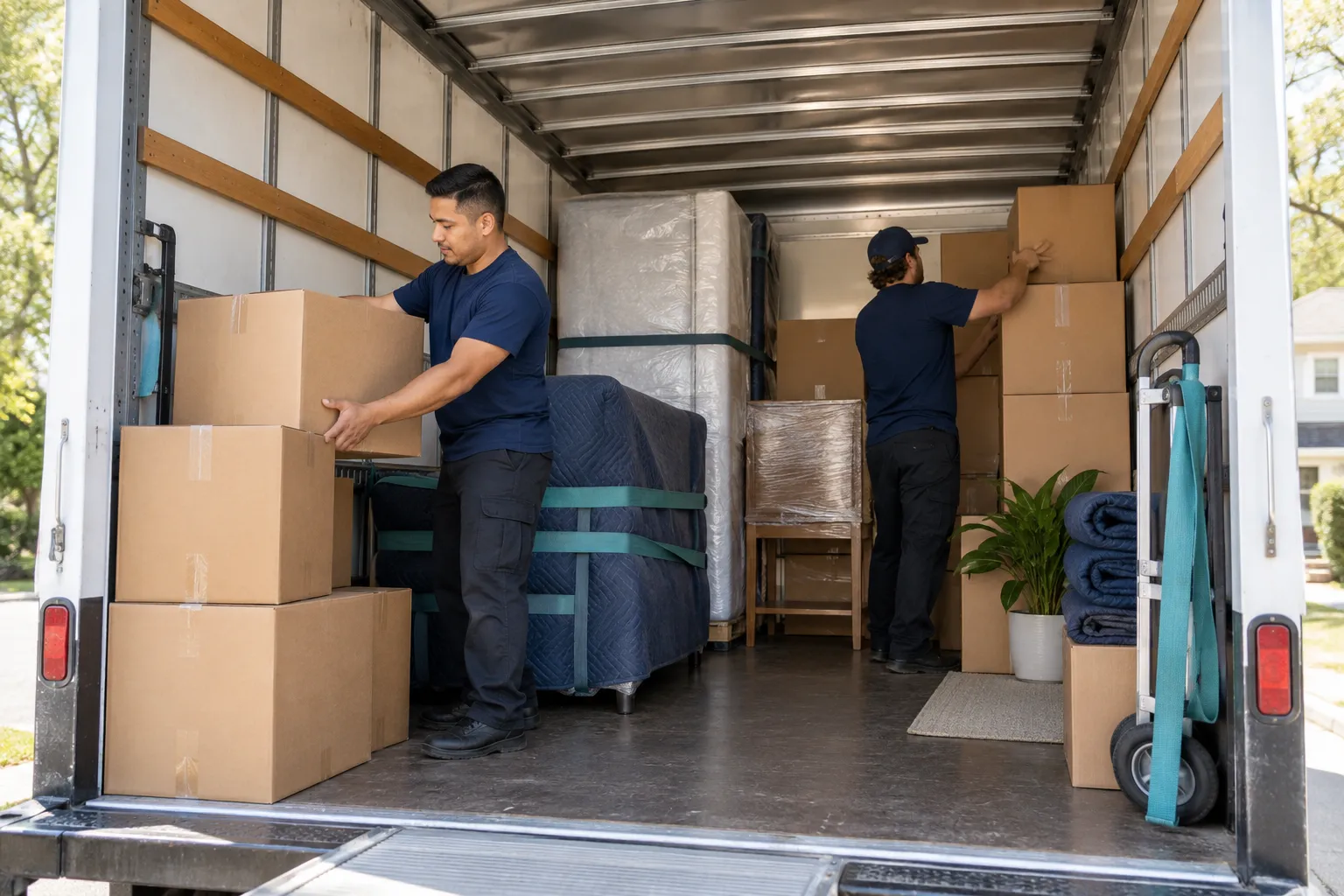
A useful move plan puts access, item details, supplies, and timing in one place before the crew arrives. Use the steps below as a working checklist, then confirm the exact service scope by phone.
Start with the truck, not the first box
Confirm the truck’s interior dimensions, payload guidance, ramp, tie-down points, and return deadline before moving day. A truck that is too small creates a late repack; a truck that is too large still needs a stable load. Follow the rental company’s instructions for the vehicle you receive.
Build a staging zone
Keep one clear lane from the home to the truck. Stage sealed boxes by weight and destination, then separate furniture that needs blankets, straps, or disassembly. Loose bags and open-top boxes slow the handoff because they cannot be stacked predictably.
Use an order that supports the unload
Load plans vary by truck and inventory, but the heaviest stable pieces usually establish the base. Protect finished surfaces and keep weight balanced from side to side. Items needed first at the destination should not disappear behind everything else unless the plan accounts for them.
Loading-day checklist
- Truck keys, contract, fuel plan, and return time
- Moving blankets, tie-downs, tape, basic tools, and labels
- Clear route, secured pets, and reserved parking
- Heavy and fragile pieces identified before work starts
- Water, weather plan, and a destination contact
Know what the crew needs from you
Share the inventory, stairs, parking distance, and truck size when requesting an estimate. If the rental changes, say so before arrival. A clear plan lets the crew spend its time moving rather than finding supplies or deciding what is ready.
Safety and consumer resources
For interstate household-goods moves, review the Federal Motor Carrier Safety Administration’s Protect Your Move guidance. California consumers can also review the California Public Utilities Commission’s moving-company information. Building rules come from the specific property manager or lease.