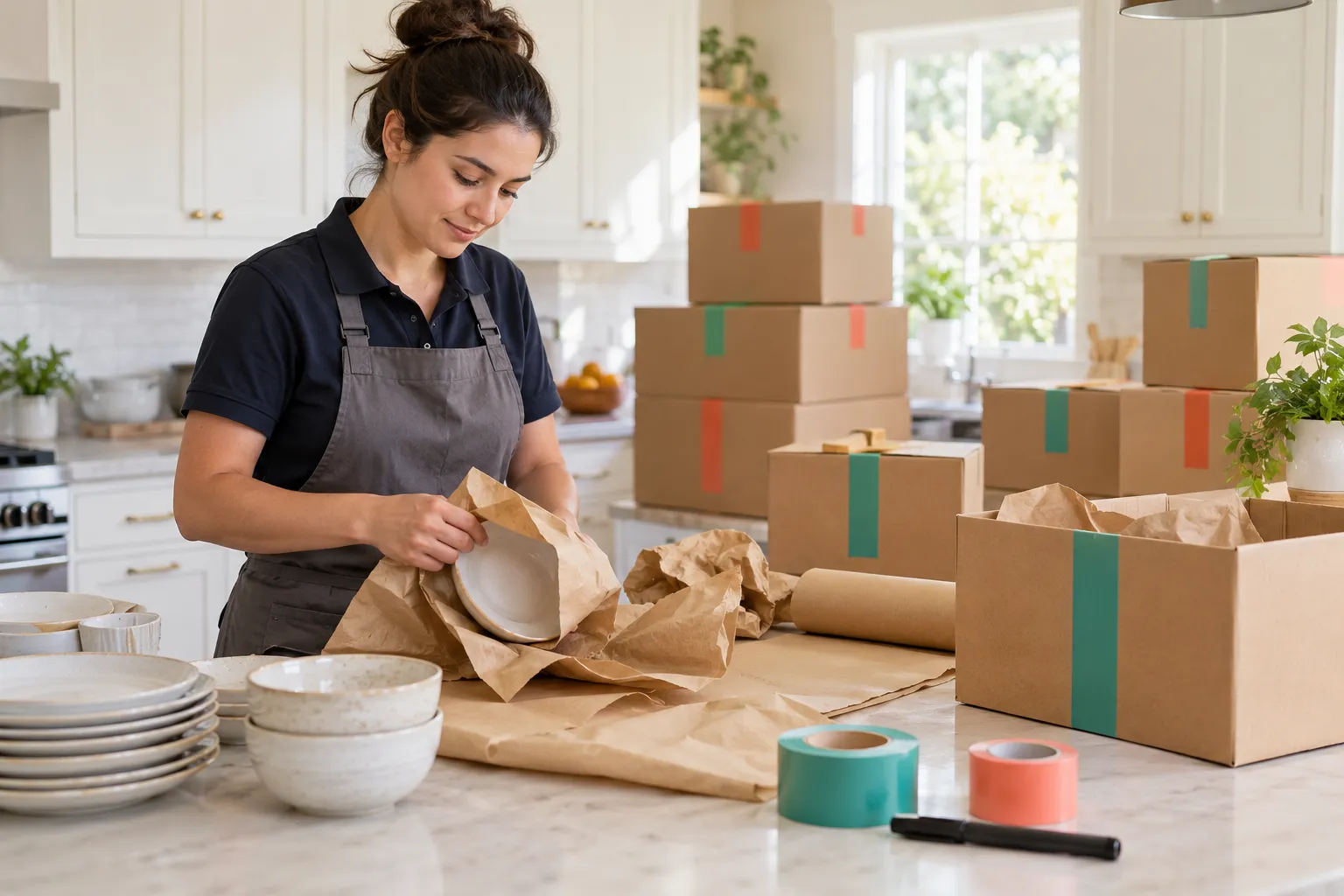
A useful move plan puts access, item details, supplies, and timing in one place before the crew arrives. Use the steps below as a working checklist, then confirm the exact service scope by phone.
Create one label rule
Give every box a destination room and a short contents note. Add a simple handling mark for fragile or open-first boxes, but keep the system easy enough that everyone uses it. Labels belong on the top and at least one side.
Pack low-use rooms first
Start with décor, books, guest rooms, and stored items. Pack the kitchen and daily-use bathroom later. Keep medication, identification, chargers, keys, moving documents, and valuables in a personal bag that stays with you.
Keep box weights reasonable
Books and dishes belong in smaller boxes; linens and light plastic items can use larger boxes. Fill empty space so contents do not shift, but do not create a box that is difficult to lift from the floor.
Room sequence
- Storage and décor
- Guest room and office archives
- Bedrooms and closets
- Living room electronics and media
- Kitchen, pantry, and daily bathroom
- Open-first kit for the destination
Prepare the handoff
Seal boxes before the crew arrives and keep walkways open. Point out anything that should not be moved. If packing help is part of the job, confirm materials and the rooms included so the visit has a clear finish line.
Safety and consumer resources
For interstate household-goods moves, review the Federal Motor Carrier Safety Administration’s Protect Your Move guidance. California consumers can also review the California Public Utilities Commission’s moving-company information. Building rules come from the specific property manager or lease.