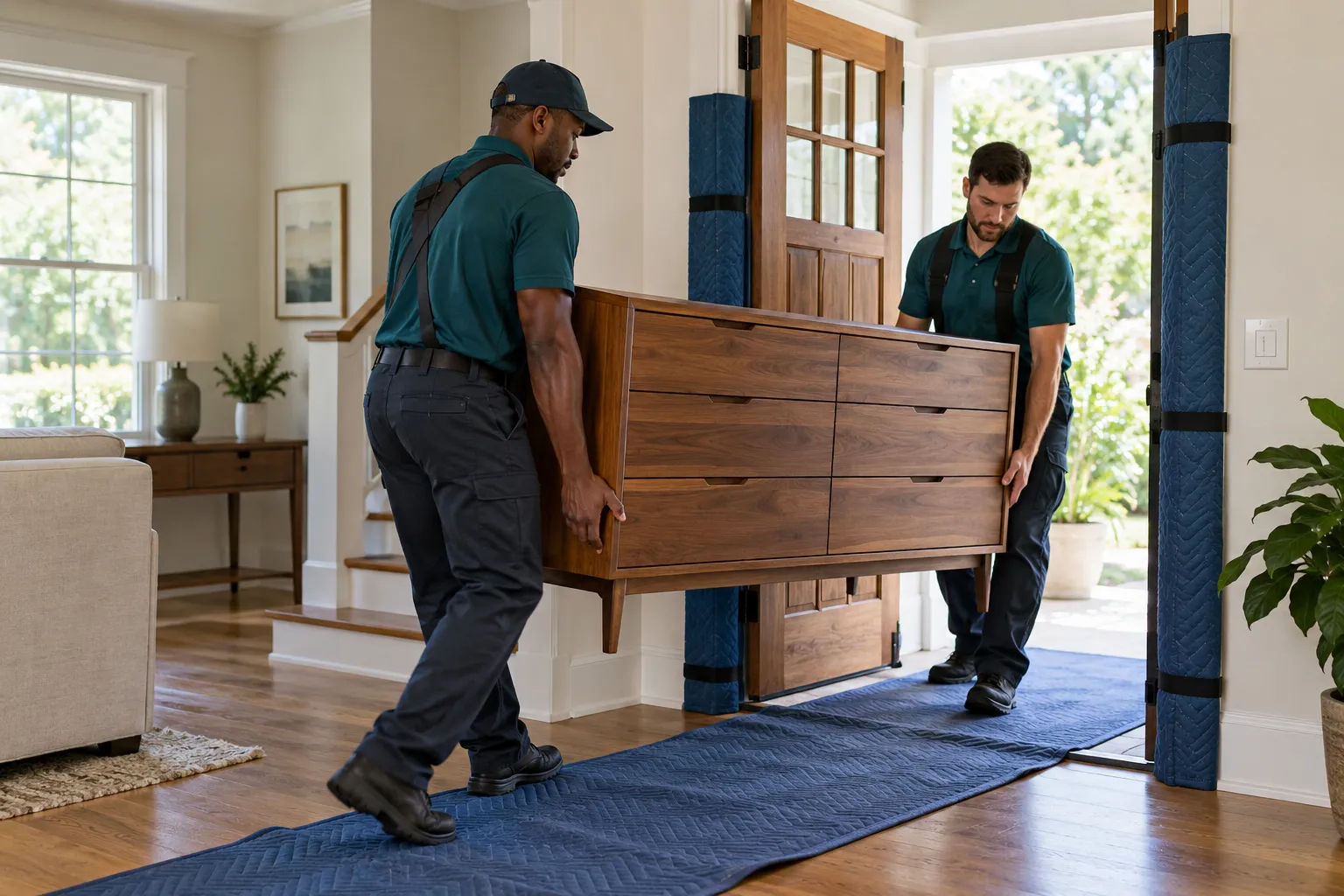
A useful move plan puts access, item details, supplies, and timing in one place before the crew arrives. Use the steps below as a working checklist, then confirm the exact service scope by phone.
Measure the item in moving position
Record height, width, depth, and any diagonal that may matter when a piece turns. Note feet, handles, trim, cushions, doors, drawers, or shelves that can be removed. Do not assume a piece can be rotated safely just because one dimension fits.
Walk the route from finish to start
Measure the narrowest door, hall, stair landing, elevator opening, and ceiling pinch point. Check both homes if the furniture is traveling. A clear doorway can still lead to a turn that the full piece cannot make.
Record obstacles that a tape measure misses
Photograph thresholds, handrails, slopes, light fixtures, wall corners, and floor transitions. Note whether doors can be removed with permission and whether a building requires protection in shared areas.
Measurement worksheet
- Item: width × depth × height
- Smallest door: width × height
- Tightest turn: approach width and landing depth
- Elevator: door width, cab depth, cab height
- Stairs: width, landing depth, rail and ceiling clearance
Ask before taking anything apart
Some furniture uses hidden fasteners, glued joints, fragile stone, or manufacturer-specific hardware. Share the make, model, and photos when possible. The crew can then tell you whether ordinary disassembly fits the job or a specialist is safer.
Safety and consumer resources
For interstate household-goods moves, review the Federal Motor Carrier Safety Administration’s Protect Your Move guidance. California consumers can also review the California Public Utilities Commission’s moving-company information. Building rules come from the specific property manager or lease.