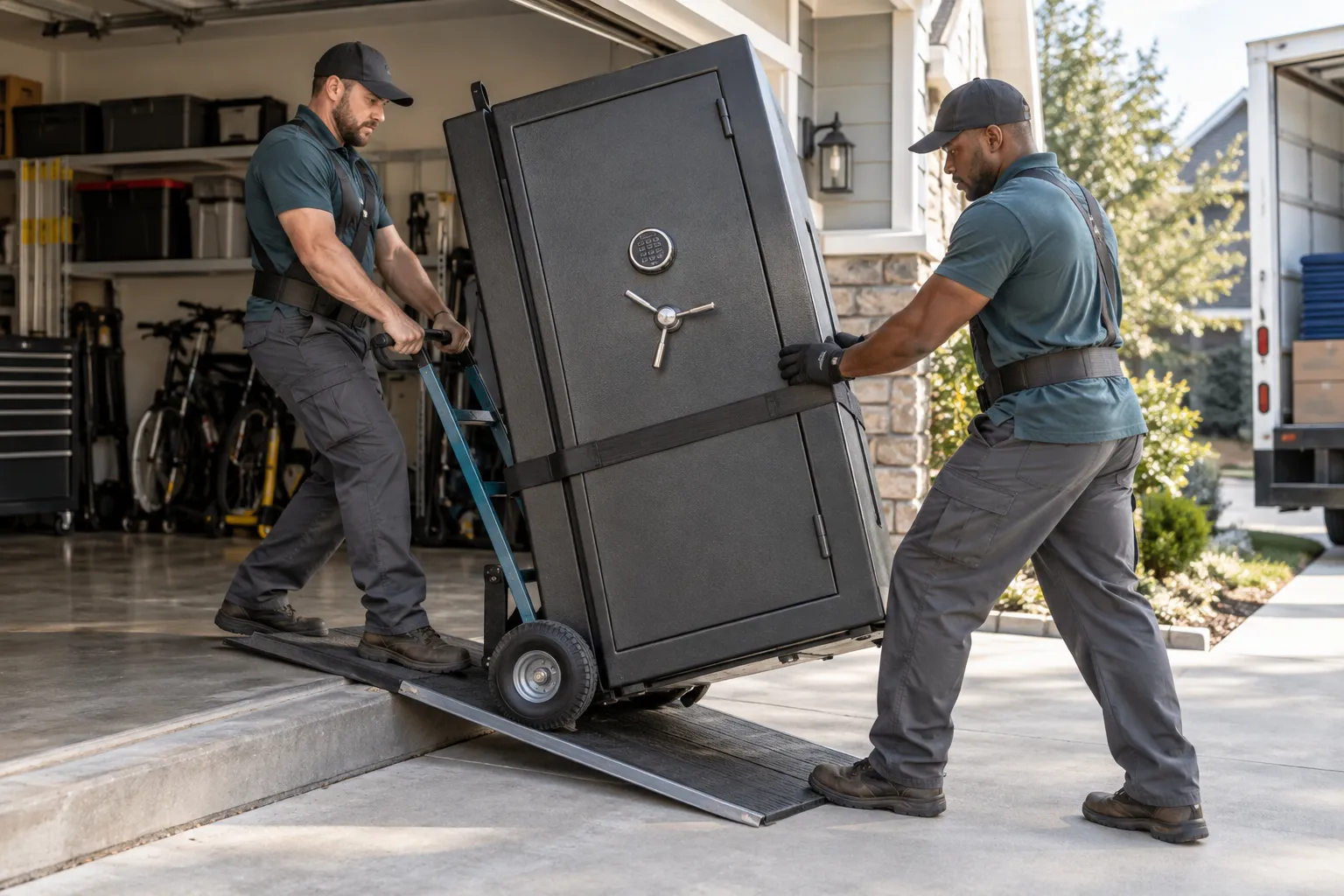
A useful move plan puts access, item details, supplies, and timing in one place before the crew arrives. Use the steps below as a working checklist, then confirm the exact service scope by phone.
Start with a model and known weight
Find the manufacturer label, manual, or model number. Guessing can understate the item by hundreds of pounds. Record dimensions and whether doors, shelves, drawers, or bases are removable under the manufacturer’s instructions.
Inspect the complete path
Stairs, soft ground, steep driveways, raised thresholds, tight landings, and finished floors can change the equipment and crew required. Photograph the item and the route from several angles at both locations.
Know the specialty signals
Pianos, gun safes, commercial equipment, stone slabs, built-ins, and items connected to utilities may need specialty movers or licensed trades. Anchoring, gas, water, refrigeration lines, and hardwired electrical work should not be treated as ordinary moving labor.
Assessment questions
- What is the verified weight and center of gravity?
- Where can equipment safely roll or anchor?
- Are there stairs, slopes, or weak surfaces?
- Does the item contain glass, stone, liquids, or sensitive mechanisms?
- Who disconnects, prepares, and reconnects it?
Accept a no when the plan does not fit
A careful provider may decline a job or require more equipment after reviewing the route. That is safer than forcing a heavy item through a path that cannot support it. Send complete details before scheduling.
Safety and consumer resources
For interstate household-goods moves, review the Federal Motor Carrier Safety Administration’s Protect Your Move guidance. California consumers can also review the California Public Utilities Commission’s moving-company information. Building rules come from the specific property manager or lease.